How to Lock a Garage Door Manually: A Comprehensive Guide
Navigating manual garage door locking involves understanding various mechanisms, from emergency releases to supplemental locks, ensuring security during power outages or malfunctions.
Residential and public garages require specific fire separation and electrical safety measures, as dictated by building codes like the IRC, for occupant protection.
Construction choices, like portal frames versus gable ends, impact structural integrity, while bollards safeguard equipment from accidental impacts within the garage space.
Understanding Manual Locking Mechanisms
Manual locking systems aren’t simply about a physical lock; they represent a layered security approach. Emergency release mechanisms, like cords and handles, disengage the opener, allowing for independent door control. These systems are crucial when facing power outages or opener malfunctions;
Beyond the release, supplemental side locks, sliding bolt locks, and keyed cylinders provide enhanced security. Understanding how these interact with your specific garage door type – sectional, roll-up, or tilt-up – is vital. Codes like IRC R302.5.3 also influence required fire separation and safety features within the garage structure.
Identifying Your Garage Door Type
Sectional garage doors are comprised of hinged panels moving vertically, often secured with side locks. Roll-up doors coil around a drum, needing internal bracket and external padlock solutions. Tilt-up doors swing upwards, benefiting from floor bolts and wall-mounted locking options.
Knowing your door type dictates the most effective manual locking strategy. Construction considerations, like portal frames versus gable ends, can influence locking point reinforcement. Adhering to codes like IRC 311.3 regarding occupancy classification is also crucial for safety and compliance.
Sectional Garage Doors
Sectional doors utilize hinged panels, making side locks and sliding bolt locks effective manual security measures. Consider keyed lock cylinders for enhanced protection. These doors often require a 20A GFCI breaker for electrical safety, as per code.
Reinforcing the locking points is vital, especially in larger garages exceeding 1,000 SF, which may fall under Group S-2 Occupancy classifications. Ensure proper fire separation walls (5/8″ firecode drywall) are in place, complying with IRC R302.5.3.
Roll-Up Garage Doors
Roll-up doors present unique locking challenges. Internal brackets and slides can be secured, but external padlocks offer a more visible deterrent. Prioritize securing the entire roll-up mechanism to prevent forced entry. Remember electrical safety – a 20A GFCI breaker is crucial.
For larger garages, consider Schedule 40 iron pipe bollards for equipment protection. Adhere to IRC R302.5.3 regarding penetrations through required fire separation walls, especially if adjacent to living spaces.
Tilt-Up Garage Doors
Tilt-up doors often rely on robust floor bolts and locks for manual security, alongside wall-mounted locks for added protection. Reinforcing the locking point is vital, especially given potential vulnerabilities. Ensure compliance with IRC Section 311.3 regarding fire separation in garages.
Consider a detached garage’s electrical setup; a dedicated 20A GFCI breaker is essential. For equipment safety, install Schedule 40 iron pipe bollards. Structural design – portal frame vs gable end – impacts security needs.
Common Reasons for Manual Locking
Power outages frequently necessitate manual operation, bypassing the electric opener. Garage door opener malfunctions, ranging from sensor issues to motor failures, also trigger manual locking. A lost or broken remote control presents another common scenario requiring a manual override.
Larger garages (over 1,000 SF) may fall under Group S-2 Occupancy, demanding fire barrier walls between business and parking areas, as per IRC 311.3. Ensure proper electrical disconnects with 20A GFCI breakers.
Power Outages
Power outages render automatic garage door openers inoperable, necessitating manual operation for access or securing the door. Understanding the manual release mechanism becomes crucial during these events. A detached garage requires an accessible electrical disconnect, often a 20A GFCI breaker, for safe maintenance.
Remember that larger garages, classified as Group S-2, require fire separation walls. Always prioritize safety when manually operating the door, especially in compromised conditions.
Garage Door Opener Malfunctions
When a garage door opener fails, the manual release is essential for operation. Malfunctions can stem from mechanical issues or electrical faults, requiring a 20A GFCI breaker check in the main panel. Larger garages, exceeding 1,000 SF, are classified as public garages needing fire separation.
Ensure the disconnect is accessible, and remember that manual operation bypasses safety sensors; proceed with caution and awareness of surroundings.
Lost or Broken Remote Controls
A lost or broken remote doesn’t necessitate vulnerability; the manual release offers a secure alternative. For larger, public garages (over 1,000 SF), stricter codes apply, including fire separation walls constructed with 5/8 firecode drywall on the garage side.
Remember to manually secure the door with side locks or sliding bolts after disengaging the opener. Consider equipment bollards – Schedule 40 iron pipe – for added protection.
Locating the Manual Release Mechanism
The manual release is crucial for operation when the opener fails. Typically, it’s a red handle or an emergency release cord hanging from the garage door’s track. Before releasing, ensure the door is fully closed and clear of obstructions.
For garages exceeding 1,000 SF, classified as S-2 occupancy, a fire barrier wall is mandatory. Electrical safety demands a 20A GFCI breaker labeled “garage” for circuits feeding the space via conduit.
Emergency Release Cord Location
The emergency release cord is usually positioned along the garage door’s track, often near the opener’s rail. It’s a vital safety feature, allowing manual operation during power outages or mechanical failures. Locate it before needing it!
Remember, larger garages (over 1,000 SF) are considered public (S-2 occupancy) and require a fire separation wall. A schedule 40 iron pipe bollard, embedded in the slab, protects equipment.
Red Handle Identification
Many garage door openers utilize a red handle as the manual release mechanism. This handle, typically found hanging down from the opener unit, disengages the carriage, enabling manual control of the door. Familiarize yourself with its location!
Ensure proper electrical disconnects (20A GFCI breaker) are present, and adhere to IRC R302.5.3 regarding fire separation wall penetrations. Consider a portal frame for narrow garages, or a gable end for wider ones.
Safety Precautions Before Releasing
Prior to disengaging the garage door opener, ensure the door is fully closed and there are no obstructions in its path. A sudden release with an open door can cause serious injury!
Remember, garages exceeding 1,000 SF may fall under Group S-2 occupancy, requiring a fire barrier wall. Verify Schedule 40 iron pipe bollards are installed for equipment protection, and confirm proper GFCI breaker labeling.
Disengaging the Garage Door Opener
To disengage, locate the emergency release cord or red handle – typically hanging from the trolley. Pull firmly to disconnect the opener, allowing manual operation. Confirm disengagement by attempting to lift the door; it should move freely.

Remember, garages over 1,000 SF are classified as Group S-2, needing fire separation. Ensure electrical disconnects have a 20A GFCI breaker; Prioritize safety, and consider equipment bollards for protection.
Pulling the Emergency Release Cord
The emergency release cord swiftly disconnects the garage door from the opener, enabling manual control. A firm, steady pull is required; the trolley will detach. Always verify complete disengagement by gently attempting to lift the door – it should move without resistance.
Consider garage size; those exceeding 1,000 SF necessitate fire separation walls. Ensure a 20A GFCI breaker protects electrical circuits. Schedule 40 iron pipe bollards offer vital equipment protection.
Manual Release Handle Operation
Many garage door openers utilize a red handle instead of a cord for manual disengagement. Locate this handle, typically near the rail, and pull it firmly downwards. This action releases the carriage, allowing for independent door operation. Confirm disengagement by attempting to lift the door manually.
Remember, larger garages (over 1,000 SF) are classified as public spaces, requiring fire barrier walls. A 20A GFCI breaker is crucial for garage electrical safety, and schedule 40 iron pipe bollards protect equipment.
Confirming Disengagement
After pulling the emergency release cord or operating the red handle, attempt to lift the garage door manually. If it moves freely, the opener is successfully disengaged. If resistance remains, double-check the release mechanism and ensure complete disconnection.
Remember, garages exceeding 1,000 SF fall under Group S-2 occupancy, demanding fire separation. Electrical disconnects require a 20A GFCI breaker, and schedule 40 iron pipe bollards offer vital equipment protection.
Manually Locking Sectional Garage Doors
Sectional doors often feature side locks, activated by sliding bolts, providing a primary security measure. Keyed lock cylinders offer enhanced protection, requiring a key for operation. Ensure these locks engage firmly, securing each door panel.
Consider fire separation walls with 5/8″ firecode drywall on the garage side, especially near living spaces. Garages require electrical disconnects with 20A GFCI breakers, and schedule 40 iron pipe bollards protect equipment.
Utilizing Side Locks
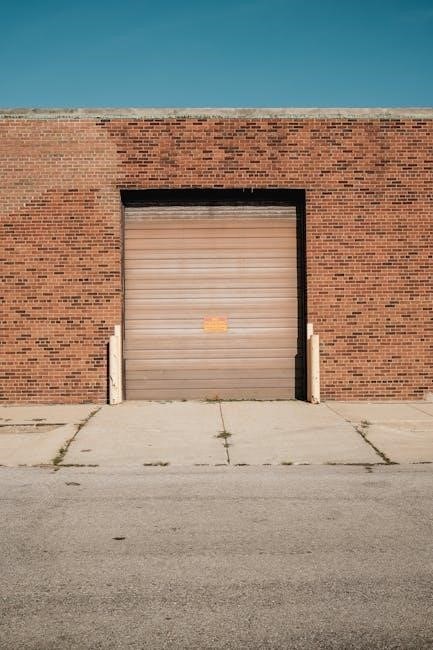
Side locks on sectional doors are a fundamental manual security feature, typically involving sliding bolts that engage with the track. Regularly inspect these bolts for smooth operation and ensure they fully extend into the receiving brackets.
Remember that garages exceeding 1,000 SF may fall under Group S-2 occupancy, necessitating a fire barrier wall. Electrical safety demands a 20A GFCI breaker, and consider schedule 40 iron pipe bollards for equipment protection.
Sliding Bolt Locks
Sliding bolt locks offer a robust manual locking solution for sectional garage doors, engaging directly with the vertical tracks to prevent lifting. Confirm the bolts slide freely and securely lock into place; lubrication maintains smooth function.
Larger garages (over 1,000 SF) require fire separation walls per IRC guidelines, and electrical installations need a dedicated 20A GFCI breaker. Schedule 40 iron pipe bollards protect against impacts, enhancing overall garage safety.
Keyed Lock Cylinders
Keyed lock cylinders provide a high-security manual locking option for garage doors, requiring a key for operation and offering controlled access. Installation typically involves mounting a lock body to the door and engaging a bolt into the doorframe or track.
Remember, larger garages necessitate fire separation walls (5/8″ firecode drywall) and a dedicated 20A GFCI breaker for electrical safety. Consider equipment bollards (Schedule 40 iron pipe) to protect against accidental vehicle impacts within the garage.
Manually Locking Roll-Up Garage Doors
Roll-up garage doors present unique locking challenges. Internal brackets and slides can be secured with bolts or pins, preventing movement. Alternatively, external padlocks can be used to lock the rolled-up door to its track, offering a visible deterrent.
Ensure the entire roll-up mechanism is secured to prevent forced entry. Remember to adhere to IRC R302.5.3 regarding fire separation if the garage is attached, and consider a 20A GFCI breaker for electrical safety.
Internal Brackets and Slides
Roll-up garage doors utilize internal brackets and slides for vertical movement. Securing these components is a primary manual locking method. Locate the brackets that attach the door slats to the vertical tracks.
Insert robust bolts or pins through pre-drilled holes in the brackets and slides, effectively immobilizing the door. This prevents the door from being lifted or forced open. Regularly inspect these locking points for wear and ensure they remain secure, complementing external padlock use.
External Padlocks
Roll-up garage doors can be secured with external padlocks, offering a visible deterrent. Look for existing hasps or loops on the door’s exterior or mounting hardware. If none exist, consider installing a heavy-duty hasp designed for garage doors.
Use a high-quality, hardened steel padlock with a long shackle to resist cutting. Combine padlock use with internal bracket locking for enhanced security. Regularly check the padlock for corrosion and ensure smooth operation.
Securing the Roll-Up Mechanism
Roll-up doors often have internal brackets and slides that, when secured, prevent the door from being lifted. Locate these brackets and use a padlock or bolt to physically block the rolling mechanism’s movement. This is particularly effective when combined with an external padlock.
Ensure the locking point is robust and difficult to access. Regularly inspect the brackets for wear and tear, and lubricate moving parts for smooth operation. Consider reinforcing the mounting points for added security.
Manually Locking Tilt-Up Garage Doors
Tilt-up doors require robust locking solutions due to their single-panel design. Floor bolts and locks are effective, securing the door to the foundation. Wall-mounted locks offer another layer of security, attaching the door to the supporting structure.
Reinforcing the locking point is crucial; consider heavy-duty hardware; Regularly inspect these mechanisms for corrosion or damage. Ensure proper alignment for smooth operation and maximum security against forced entry attempts.

Floor Bolts and Locks
Floor bolts for tilt-up doors involve securing a bolt through the door’s bottom edge into the concrete floor. These provide a strong, physical barrier against lifting. Installation requires precise drilling and robust bolt selection for optimal holding power.
Consider using multiple bolts spaced evenly across the door’s width for enhanced security. Regularly check for corrosion and ensure the bolts are tightened. Pairing with a wall-mounted lock creates a dual-locking system, maximizing protection.
Wall-Mounted Locks
Wall-mounted locks for tilt-up doors typically involve installing a locking mechanism on the garage wall that engages with the door itself. These can range from simple slide bolt locks to more sophisticated keyed cylinders, offering varying levels of security.
Proper installation is crucial; ensure the lock is securely anchored to the wall studs. Combining a wall lock with a floor bolt significantly increases resistance to forced entry. Regularly inspect the lock’s functionality and consider using a heavy-duty option.
Reinforcing the Locking Point
Reinforcing the locking point is vital for tilt-up garage doors, as the door’s material can be vulnerable to forced entry. Consider installing a metal strike plate behind the door where the bolt engages, distributing the impact force.
Adding metal bracing around the lock area strengthens the surrounding wood. Garage door reinforcement kits offer comprehensive solutions, including strengthening plates and longer screws. Regularly inspect the locking point for any signs of weakness or damage, addressing them promptly.
Additional Security Measures
Boosting garage security goes beyond basic locks. Garage door reinforcement kits add strength to vulnerable areas, resisting forced entry. Security sensors and alarms provide alerts upon unauthorized access, deterring potential intruders.
Exterior lighting illuminates the area, enhancing visibility and discouraging criminal activity. Consider motion-activated lights for added effectiveness. Regularly assess your garage’s security, combining physical barriers with electronic surveillance for comprehensive protection.
Garage Door Reinforcement Kits
Reinforcement kits significantly bolster garage door security by strengthening vulnerable points. These kits typically include steel plates to reinforce the door itself, the door jambs, and the locking mechanisms.
Installation involves securely attaching these plates with heavy-duty hardware, making it considerably harder for intruders to force the door open. Prioritize kits designed for your specific door type for optimal effectiveness, enhancing overall resistance to break-ins.
Security Sensors and Alarms
Integrating security sensors and alarms adds a crucial layer of protection to your manually locked garage door. Door and window sensors can detect unauthorized entry, triggering a loud alarm to deter intruders and alert you to potential breaches.
Consider motion detectors inside the garage for added security. Smart home integration allows remote monitoring and control, providing peace of mind even when you’re away. A monitored alarm system offers a direct connection to emergency services.
Exterior Lighting
Strategic exterior lighting significantly enhances garage door security, especially when relying on manual locking. Brightly illuminate the area around the door, eliminating potential hiding spots for intruders. Motion-activated lights are particularly effective, startling anyone approaching unexpectedly.

Consider dusk-to-dawn lights for continuous illumination. Ensure lights are positioned to avoid glare for neighbors and maximize visibility for security cameras. Well-lit garages are less attractive targets for criminal activity, bolstering your manual locking efforts.
Maintaining Your Manual Locking System
Regular maintenance is crucial for a reliable manual locking system. Lubricate all moving parts – side locks, sliding bolts, and key cylinders – with silicone-based lubricant to prevent corrosion and ensure smooth operation. Inspect locks for wear and tear, replacing damaged components promptly.
Test the manual locking mechanism monthly to confirm functionality. Address any sticking or jamming immediately. A well-maintained system provides consistent security, complementing your primary garage door locking methods.
Lubricating Locking Mechanisms
Regular lubrication prevents corrosion and ensures smooth operation of your manual locking system. Utilize a silicone-based lubricant, avoiding oil-based products that attract dust and grime. Apply lubricant to all moving parts: side locks, sliding bolt mechanisms, and within key cylinders.
Focus on pivot points and sliding surfaces. Wipe away excess lubricant to prevent buildup. This simple step significantly extends the lifespan of your locks and maintains their effectiveness, bolstering garage security.
Inspecting for Wear and Tear
Routine inspections are crucial for identifying potential weaknesses in your manual locking system. Check for rust, cracks, or bending in locks, bolts, and brackets. Examine the emergency release cord for fraying or damage, replacing it immediately if compromised.
Test lock functionality regularly, ensuring smooth operation. Address any signs of wear promptly to prevent failures. A proactive approach maintains security and avoids inconvenient lockouts, safeguarding your property effectively.
Regular Testing of Locks
Consistent lock testing verifies continued functionality and identifies subtle issues before they escalate. Simulate locking and unlocking multiple times, observing for any resistance or unusual sounds. Confirm that side locks, sliding bolts, and keyed cylinders engage and disengage smoothly.
Periodic checks ensure your manual locking system remains a reliable security measure. This proactive habit prevents unexpected failures, offering peace of mind and protecting your belongings from potential unauthorized access.
Troubleshooting Common Issues
Stuck locks often respond to lubricant, like silicone spray, applied to the locking mechanism; avoid oil-based products. Broken release cords may require professional repair or replacement to restore emergency access. Difficulty re-engaging the opener could indicate misalignment – carefully inspect the track and trolley.
If issues persist, consult a garage door specialist. Addressing these problems promptly maintains security and prevents further damage, ensuring reliable manual operation when needed.

Stuck or Jammed Locks
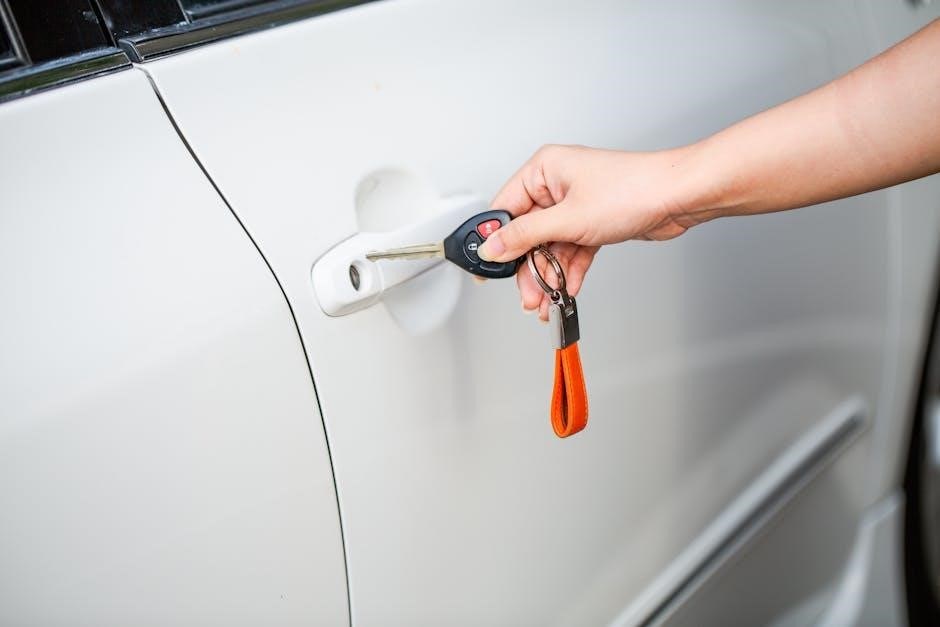
Stuck locks frequently occur due to dirt, debris, or lack of lubrication. Begin by attempting gentle manipulation – avoid excessive force. Silicone-based lubricants are ideal; avoid oil-based products that attract grime. If the lock remains jammed, carefully inspect for obstructions within the mechanism.
Persistent issues may indicate internal damage, necessitating professional attention. Do not attempt forceful disassembly, as this could worsen the problem and compromise security;
Broken Release Cords
A severed emergency release cord compromises manual operation. Do not attempt to tie a replacement – this is unsafe and unreliable; Instead, contact a qualified garage door technician for a proper repair or replacement. A functioning release is crucial for disengaging the opener during power outages.
Temporary solutions are not recommended; a professional ensures correct tension and secure attachment, preventing accidental disengagement and maintaining garage door safety.
Difficulty Re-Engaging the Opener
Struggling to reconnect the garage door opener after manual operation often indicates misalignment. Gently lift the door a few inches and try re-engaging the carriage. If unsuccessful, avoid forcing it – this can damage the mechanism.
Check for obstructions in the track and ensure the emergency release is fully reset. A technician can diagnose and correct underlying issues, restoring smooth, automated operation and preventing future difficulties.
Garage Door Security Codes and Regulations (IRC R302.5.3)
The 2024 IRC R302.5.3 dictates that any penetrations through the fire separation wall between a garage and residence must maintain fire resistance. This includes wiring, plumbing, and ventilation systems.
Proper sealing around these penetrations is crucial to prevent fire and smoke spread. Adherence to these codes ensures residential safety, particularly in attached garages, safeguarding occupants from potential hazards originating within the garage space.
Fire Separation Walls in Garages (IRC Section 311.3 & R302.6)
IRC Section 311.3 classifies parking garages as Group S-2 occupancies, necessitating fire barriers when adjacent to other occupancies like residences. IRC R302.6 mandates a fire-rated wall separating the garage from the living space, often utilizing 5/8″ fire-code drywall.

This separation prevents fire spread, protecting the home. Existing structures may require retrofitting to meet these standards, especially concerning laundry areas within garages.
Electrical Disconnects in Garages (20A GFCI Breaker)
IRC requires a readily accessible electrical disconnect within or on the garage structure. A common configuration involves a 20A GFCI breaker dedicated to garage circuits, often fed via conduit from the main panel.
This GFCI protection minimizes electrical shock hazards in damp garage environments. Detached garages necessitate conduit runs, ensuring safe power delivery. Proper labeling of the breaker is crucial for identification and safety during maintenance or emergencies.
Garage Construction Considerations (Portal Frame vs Gable End)
Garage structural design impacts overall security and space utilization. Portal frames, often favored for narrower garages, offer efficient support. Gable end construction, suitable for wider spaces like a 30×30 garage, provides more overhead storage potential.
Roof alignment with the house—maintaining consistent eaves—enhances aesthetic integration. Careful consideration of peak roof direction and garage dimensions is vital for structural stability and code compliance.
Equipment Bollards and Protection (Schedule 40 Iron Pipe)
Garage safety necessitates protecting vital equipment from vehicle impact. Schedule 40 iron pipe bollards, embedded at least 36 inches into the concrete slab, provide robust protection.
Alternatives include wheel stops and bolted pipe retrofits, though embedded pipes are most common. These bollards safeguard electrical panels and other critical infrastructure, minimizing damage and ensuring continued functionality, even during accidental collisions within the garage space.