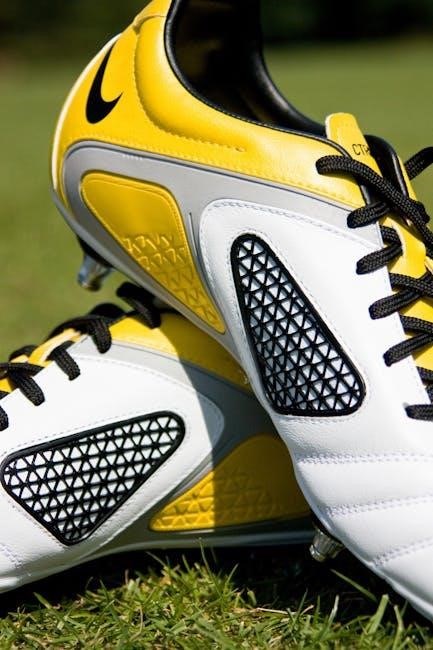
Understanding Soccer Shoe Sizing
Navigating the world of soccer footwear requires understanding that accurate sizing is paramount for performance and comfort on the pitch, impacting agility and preventing injuries.
Why Accurate Soccer Shoe Size Matters
Properly fitted soccer shoes are fundamental to a player’s performance and well-being. Ill-fitting shoes can lead to a multitude of issues, hindering agility, speed, and overall control of the ball. Shoes that are too large cause slippage inside the boot, reducing power transfer and increasing the risk of blisters and ankle instability. Conversely, shoes that are too small constrict the foot, leading to discomfort, numbness, and potentially causing black toenails or more serious foot problems.
A precise fit enhances a player’s ability to react quickly, make sharp cuts, and maintain balance. Comfort is key, allowing players to focus entirely on the game without distraction from foot pain or discomfort. Investing time in finding the correct size isn’t merely about comfort; it’s a strategic investment in athletic potential and injury prevention.
The Difference Between Shoe Sizes Globally
Soccer shoe sizing isn’t standardized worldwide, creating confusion for players and retailers alike. US sizing differs significantly from European (EU) and UK standards. A US men’s size 9, for example, won’t directly translate to a size 9 in the UK or EU. Furthermore, manufacturers can have slight variations within each system. Centimeter (CM) measurements offer a more universal approach, providing a direct correlation to foot length, but require accurate measurement.
Understanding these discrepancies is crucial when purchasing online or from international brands. Size charts are essential tools, but it’s wise to consult multiple charts and consider brand-specific sizing guides. Conversion charts can be helpful, but aren’t always precise. Always prioritize foot length in centimeters for the most reliable fit, especially when ordering from overseas.

Measuring Your Feet for Soccer Shoes

Precise foot measurements are the foundation of finding the perfect fit, ensuring optimal comfort and performance during gameplay, avoiding blisters and discomfort.
How to Accurately Measure Foot Length
To begin, place a piece of paper larger than your foot flat on the floor against a wall. Stand with your heel against the wall and trace the outline of your foot carefully, ensuring the pen or pencil is held vertically. Repeat this process for both feet, as slight variations in size are common.
Next, using a ruler or measuring tape, measure the distance from the back of the heel tracing to the tip of the longest toe. It’s crucial to measure to the longest toe, which isn’t always the big toe. Record both measurements in centimeters or inches;
Finally, it’s recommended to measure your feet at the end of the day, as they tend to swell slightly throughout the day due to activity. This will provide a more accurate representation of your foot size when you’re actively playing soccer. Remember to use these measurements as a starting point when consulting soccer shoe size charts.
Understanding Foot Width
Beyond length, foot width is a critical factor often overlooked when selecting soccer shoes. Feet aren’t simply long or short; they also vary in width – from narrow to wide. Measuring width can be a bit more challenging, but it’s essential for optimal comfort and performance.
To determine your foot width, measure the widest part of your foot, typically across the ball of your foot. Use a flexible measuring tape and ensure it’s snug but not overly tight. Compare this measurement to standard width classifications: narrow (under 9.5cm), medium (9.5-10.5cm), and wide (over 10.5cm).
Many soccer shoe brands offer shoes in different widths. If you find your foot feels cramped in a standard width, explore wide options. Conversely, if your foot slides around, consider a narrow fit. Ignoring width can lead to blisters and discomfort.
Measuring Both Feet – It’s Crucial!
A common mistake when purchasing soccer shoes is measuring only one foot. However, it’s highly likely your feet aren’t exactly the same size! Most people have one foot slightly larger than the other. Failing to account for this difference can lead to an ill-fitting shoe and potential discomfort during play.
Therefore, meticulously measure both feet, following the instructions for measuring foot length. Record both measurements and always use the larger of the two as your guide when selecting a shoe size. This ensures adequate space for your larger foot, preventing cramping and blisters.
Prioritizing the larger foot is essential for a comfortable and secure fit. Don’t assume the smaller foot will simply “adjust” – it’s better to err on the side of slightly more room than too little.

Soccer Shoe Size Charts: A Comprehensive Guide
Utilizing conversion charts – encompassing US, EU, UK, and centimeter measurements – is vital for finding your perfect soccer shoe size, ensuring optimal fit.
US Men’s Soccer Shoe Size Chart
Determining your US men’s soccer shoe size necessitates a precise understanding of foot length in relation to standard sizing. Generally, a US size 6.5 corresponds to a foot length around 24.5cm, while a size 7 is approximately 25cm. Progressing through the sizes, a 7.5 typically measures 25.5cm, and a 9.5 equates to roughly 27.5cm. A size 10 often aligns with 28cm, and a 10.5 measures around 28.5cm. Finally, a size 11.5 usually corresponds to a foot length of approximately 29.5cm.
However, it’s crucial to remember these are averages, and variations exist between brands. Always consult the specific brand’s size chart for the most accurate fit. Furthermore, consider that firm ground (FG) cleats might fit slightly differently than indoor (IC) or turf (TF) shoes due to construction variations. Accurate measurement, combined with brand-specific charts, is key to a comfortable and performance-enhancing fit.
US Women’s Soccer Shoe Size Chart
Understanding US women’s soccer shoe sizing requires acknowledging the differences compared to men’s sizes. A typical size 6 equates to approximately 23cm in foot length, while a size 7 generally measures around 23.5cm. Moving up, a size 8 often corresponds to 24cm, and a size 9 is roughly 24.5cm. A size 10 usually aligns with 25cm, and a size 11 measures approximately 25.5cm.
It’s vital to note that women’s feet are generally narrower than men’s, influencing shoe fit. Therefore, relying solely on length isn’t sufficient. Always refer to the specific brand’s women’s size chart, as variations are common. Consider width measurements as well, as some brands offer wider or narrower options. Prioritizing a snug, comfortable fit is crucial for optimal performance and injury prevention on the field. Accurate measurement and brand-specific charts are essential.
European (EU) Soccer Shoe Size Chart
The European (EU) soccer shoe size chart presents another layer of complexity, differing from US and UK systems. A size 36 typically corresponds to a foot length of 22cm, while size 37 is around 22.5cm. Progressing, size 38 usually equates to 23cm, and size 39 measures approximately 23.5cm. A size 40 generally aligns with 24.5cm, and size 41 is roughly 25cm.
EU sizing is widely used by many soccer shoe manufacturers, making it essential for international shoppers. However, variations between brands still exist, so consulting specific brand charts is crucial. Remember that EU sizes tend to run slightly smaller than US sizes. Prioritize accurate foot length measurement in centimeters for the most reliable conversion. A comfortable, secure fit is paramount for performance and preventing blisters during play.
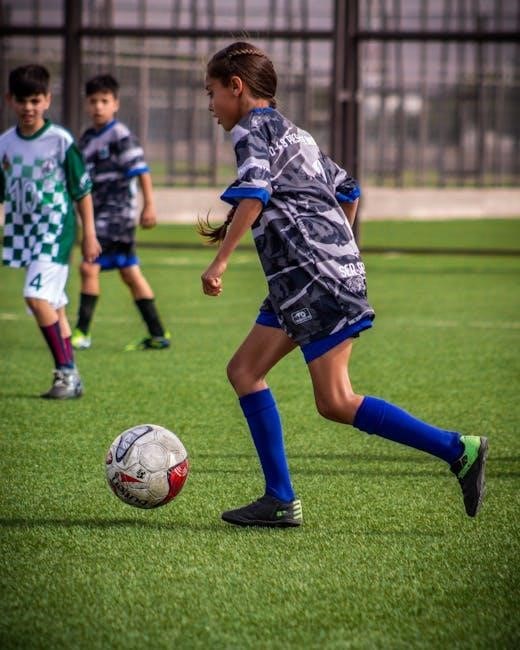
UK Soccer Shoe Size Chart
The United Kingdom (UK) soccer shoe size chart offers yet another standard to navigate. A UK size 6 typically corresponds to a US size 7, while a size 7.5 UK equates to a US size 8.5. Size 8 UK generally aligns with a US size 9, and size 9 UK is approximately a US size 10. A UK size 10 usually matches a US size 11, and size 11 UK is roughly a US size 12.
UK sizing is commonly found, particularly with brands originating from the region. However, brand-specific variations are common, emphasizing the need for individual chart consultation. It’s vital to remember that UK sizes can differ slightly from EU sizes. Accurate foot measurement, ideally in centimeters, aids in precise conversion. Prioritizing a snug, yet comfortable fit is crucial for optimal performance and injury prevention on the soccer field.
Centimeter (CM) to Soccer Shoe Size Conversion
Converting foot length in centimeters (cm) to soccer shoe size is a foundational step for a proper fit. A foot measuring 21.5cm typically corresponds to a size 33, while 22cm aligns with size 34. For 22.5cm feet, a size 35 is generally recommended, and 23cm usually fits a size 36. A 23.5cm foot often requires a size 37, and 24cm corresponds to size 38.
These conversions serve as a starting point, but variations exist between brands and shoe models. Always consult the specific brand’s size chart for the most accurate recommendation. Remember to measure both feet, as slight differences are common. Adding a small allowance (approximately 0.5cm) for sock thickness and foot swelling during play is advisable for optimal comfort and performance on the field.
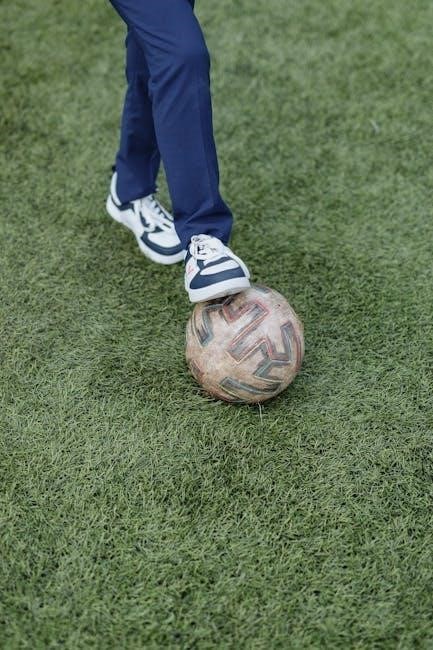
Key Considerations When Choosing Soccer Shoe Size
Prioritize sock thickness, brand-specific fits, and your playing position when selecting soccer shoes; these factors significantly influence optimal sizing and on-field performance.
Accounting for Sock Thickness
When determining your soccer shoe size, it’s crucial to consider the thickness of the socks you’ll be wearing during matches and practices. Most players opt for dedicated soccer socks, which are generally thicker than everyday socks, providing cushioning and support. Failing to account for this extra bulk can lead to shoes feeling too tight and uncomfortable, potentially causing blisters or restricting circulation.
Therefore, always measure your feet while wearing the type of socks you intend to use for soccer. If you typically wear thicker socks, it’s generally recommended to go up half a size or even a full size from your standard shoe size. Conversely, if you prefer thinner socks, you might be able to stick with your regular size. Remember, a little extra room is preferable to shoes that are too snug, as your feet will swell during activity.
Experimenting with different sock thicknesses during the fitting process can help you find the perfect balance between a secure fit and comfortable foot movement.
Different Brands, Different Fits
It’s essential to recognize that soccer shoe sizing isn’t standardized across all brands. Each manufacturer – Adidas, Nike, Puma, and others – employs unique lasts (the foot-shaped form around which the shoe is constructed) and sizing conventions. What feels like a US size 9 in one brand might fit differently in another.
Consequently, relying solely on your usual shoe size can be misleading. It’s always best to consult the specific size chart provided by the brand you’re considering. Many brands also offer online size guides or virtual fitting tools to help you determine the most accurate size. Reading reviews from other players can also provide valuable insights into a brand’s typical fit.
Don’t assume consistency; always try on shoes from different brands whenever possible to experience the variations firsthand. Prioritize fit over brand loyalty to ensure optimal comfort and performance.
Position-Specific Shoe Fit Preferences
Soccer players often develop preferences for shoe fit based on their position on the field. For example, attacking players, like forwards and wingers, frequently prefer a snug, close-fitting shoe to enhance ball control and responsiveness during quick movements and dribbling.
Defenders, prioritizing stability and protection, may opt for a slightly more relaxed fit to accommodate thicker socks and provide a secure feel during challenges. Midfielders often seek a balance – a comfortable yet secure fit that supports both agility and endurance.
Goalkeepers generally favor a wider fit for stability during lateral movements and a cushioned sole for impact absorption. Understanding your positional demands and tailoring your shoe fit accordingly can significantly improve your performance and comfort on the field.
Dealing with Common Soccer Shoe Sizing Issues
Addressing fit problems like tightness or looseness is crucial; consider breaking-in periods, returns, insoles, or lacing adjustments for optimal comfort and performance.
Shoes Too Tight: Breaking Them In or Returning
Experiencing constricted soccer shoes can significantly hinder performance and lead to discomfort or even blisters. Initially, attempt a careful break-in process by wearing them for short periods at home with thick socks, gradually increasing the duration. Utilizing a shoe stretcher can also provide some relief, gently expanding the tight areas. However, recognize limitations; if the shoes remain painfully tight after reasonable efforts, a return or exchange is often the most sensible course of action.
Prioritize foot health over forcing an ill-fitting shoe. Persistent discomfort can lead to long-term issues. Carefully review the retailer’s return policy before purchase, ensuring you have a viable option if the size proves unsuitable. Don’t hesitate to consult with a professional fitter if you’re unsure about the best approach, as they can assess the fit and offer tailored advice.
Shoes Too Loose: Insoles and Lacing Techniques
Dealing with soccer shoes that feel too spacious requires proactive solutions to enhance fit and prevent slippage during play. The first line of defense is utilizing insoles; these can effectively fill excess volume, providing a snugger, more secure feel. Consider experimenting with different insole thicknesses to achieve optimal comfort and support.
Furthermore, mastering specific lacing techniques can dramatically improve shoe security; The “heel lock” or “runner’s loop” method creates extra tension around the ankle, minimizing heel lift and enhancing stability. Explore various lacing patterns to find what best conforms to your foot shape. If these adjustments prove insufficient, consider seeking professional advice or exploring alternative shoe sizes.
Width Issues: Finding Wide or Narrow Options
Addressing width concerns is crucial for soccer shoe comfort and performance. Not all feet conform to standard widths, necessitating exploration beyond typical sizing. If experiencing pinching or discomfort on the sides, investigate brands offering dedicated “wide” (2E or 4E) options. These provide increased volume in the forefoot and midfoot, alleviating pressure points.
Conversely, individuals with particularly narrow feet may benefit from models specifically designed for a slimmer fit. Some manufacturers cater to this need, offering “narrow” widths. Utilizing tongue pads can also help fill excess space in wider shoes, creating a more secure feel. Don’t hesitate to consult specialized retailers for personalized fitting advice and recommendations tailored to your unique foot shape.

Resources for Further Sizing Assistance
Explore online size guides from leading brands and consider professional fitting services for expert advice, ensuring a perfect and comfortable soccer shoe fit.
Online Size Guides from Major Brands
Many prominent soccer shoe manufacturers offer detailed online size guides to assist customers in finding their optimal fit. These resources typically include comprehensive charts converting between US, UK, European, and centimeter measurements. Adidas, Nike, Puma, and EDEA are examples of brands providing such tools.
These guides often feature printable foot measurement templates, allowing users to accurately determine their foot length and width at home. Some brands even incorporate interactive fitting tools or virtual try-on experiences. It’s crucial to consult the specific size chart for the brand you intend to purchase from, as sizing can vary significantly.
Remember to carefully follow the instructions provided by each brand, paying attention to details like sock thickness and measurement timing. Utilizing these online resources can significantly improve your chances of selecting the correct soccer shoe size, minimizing the risk of discomfort or performance issues.
Professional Fitting Services
For those seeking the most precise fit, utilizing professional fitting services at specialized soccer retailers is highly recommended. Trained staff possess the expertise to accurately measure foot length and width, considering unique foot shapes and potential biomechanical factors. They can assess gait and recommend shoe models suited to individual playing styles and positions.
These services often involve dynamic fitting, where you’re observed while simulating soccer movements to evaluate shoe performance and comfort. Professionals can identify potential pressure points or areas of friction, suggesting adjustments or alternative models. This personalized approach surpasses the accuracy of self-measurement and online guides.
While potentially incurring a small cost, a professional fitting can save you money and discomfort in the long run by preventing the purchase of ill-fitting shoes. It’s an invaluable investment for serious players prioritizing optimal performance and injury prevention.
Leave a Reply
You must be logged in to post a comment.